What You Lose in the Tunnel
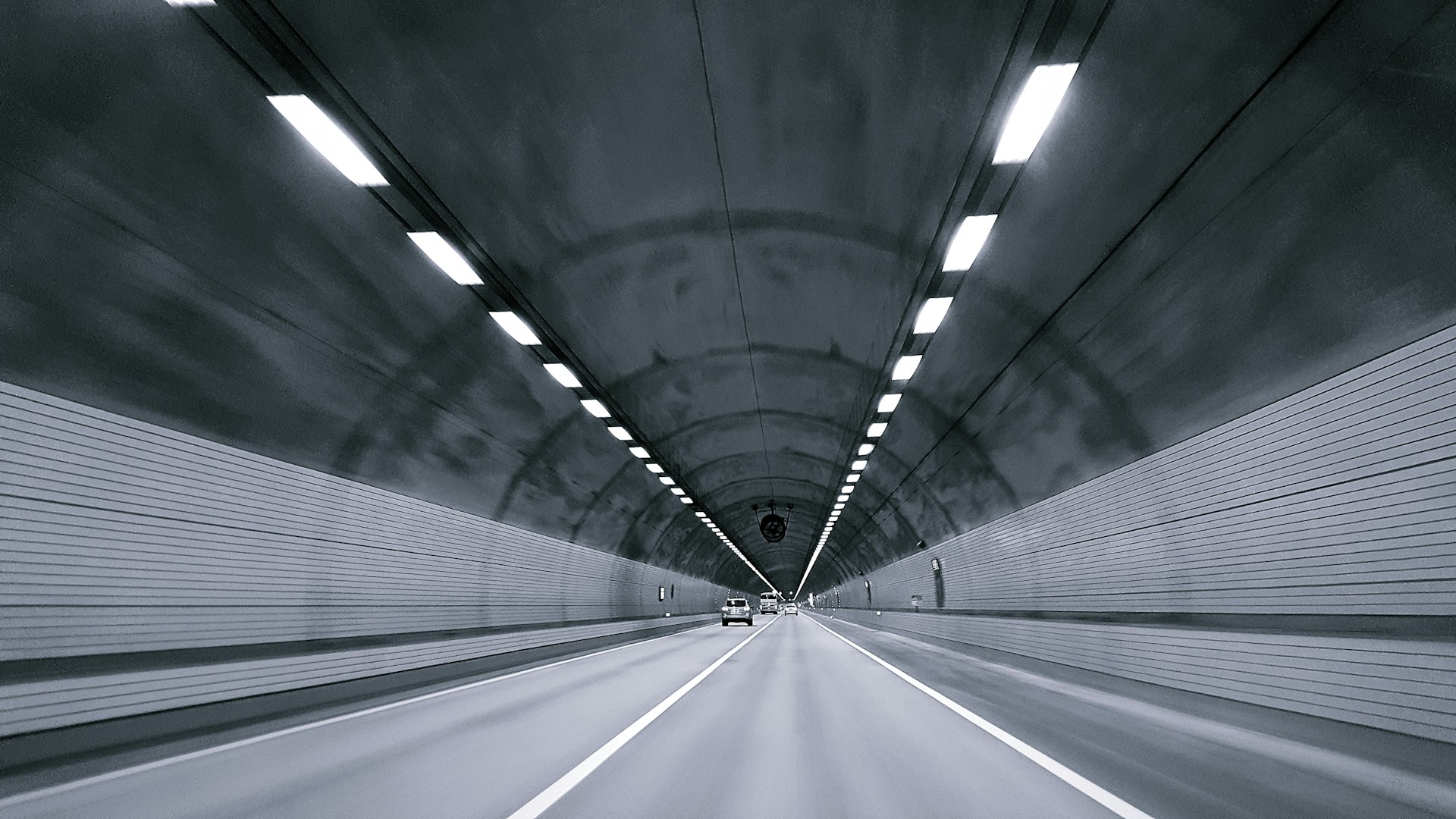
I drive west out of Denver on I-70 a few times a year. About sixty miles in, the road runs into the Eisenhower Tunnel, a 1.7 mile long concrete tunnel at 11,158 feet, the highest point on the Interstate system. Inside it’s dark and loud and smells like exhaust. Then you’re out the far side, dropping toward Silverthorne.
The tunnel is the fastest way through, and it’s the route that every mapping app suggests to every driver.
A couple of miles before the tunnel, US 6 splits off and climbs over Loveland Pass at 11,990 feet, about 800 feet higher than the tunnel’s high point. It ultimately leads to the same destination and is half an hour longer on a good day, more if there’s weather. It’s one of the best drives in Colorado, and trucks hauling hazardous materials get routed over the top whether they want the view or not. The app offers me the pass every time I make that drive. It’s never the first option, so taking it means deciding against what the app put in front of me and thinking about whether I have the time to add to my drive.
I’ve had that drive in my head while watching companies hand whole functions over to AI. The pitch is always the same: here’s a job, here’s what it costs, here’s a system that does the same work for less. A machine handles the routine things that look the same every time. What the pitch skips is the part of the job that never made it into a job description.
Careerminds surveyed 600 HR professionals in February 2026, all of whom had made redundancies in the previous year. More than a third of the companies surveyed, 35.6%, had already rehired over half the roles they cut. Among the ones whose cuts were specifically AI-led, 32.7% rehired somewhere between a quarter and a half. And 54.6% said the cuts weren’t worth making, because the technology “required more human oversight than originally anticipated.”
We’ve seen versions of this before, and I was writing about it while it happened. In 2011 I wrote up an interview with Canadian Pacific’s CIO about what happened after most of their IT group got outsourced. It destroyed their ability to function, and took morale, careers, ambitions and a long and thorough knowledge base down with it. I believed it then and still do: outsourcing devastated most of the IT groups I watched go through it.
Canadian Pacific was not unusual. The backsourcing research from that era lands on one short list nearly every time: loss of internal expertise, loss of control, costs that climbed rather than fell.
A lot of that was the contract itself: a seven-year term, a change-request process that made everything slow and expensive, a counterparty with no reason to hurry. AI vendors have their own margins to protect, but nobody is signing seven-year terms for it, and switching is a matter of weeks. Every vendor pitching you will make that point, and they’re right.
Outsourcing moved the knowledge onto somebody else’s payroll. It stayed alive there and kept growing, because people were still doing the work every day, which is the only reason those companies could buy it back when they realized they needed to bring the people back inside. When the work goes to a machine instead, there’s no payroll it moves to and no way to “hire it back” from a machine. The people who would have spent the next five years learning it have nowhere left to learn it. Not at your company, and not at the ones you’d hire from, because most of them are being sold the same plan this quarter.
When I point out that nobody is learning the work any more, the answer comes back the same: automate the routine 90%, keep people for the hard 10%. It sounds sensible, and the vendors will tell you it’s the way to go. Klarna has been running that arrangement for a year and nobody knows yet whether it’s actually working or not.
You can’t easily separate the routine 90% and the hard 10% though. The hard cases surface while somebody is working through the ordinary ones, so when nobody’s doing the ordinary work nobody sees them coming. You get good at the rare problems by grinding through a thousand ordinary ones. Cut the ordinary work and there’s nothing left to build that judgment on.
The value a person brings to a job isn’t spread evenly across it. What’s left over is the problem that hasn’t come up before, or comes up twice a year, or shows up wearing a disguise so nobody recognizes it as the same thing they solved in 2019. A machine treats all of it as an input it can process and a route it can take, so it takes the route. It won’t stop to ask whether the question itself was wrong. I’ve written before that these systems are very good at executing a task once somebody has decided it’s the right task , and the deciding is what they’re still poor at.
So when somebody brings you a process to automate, ask who currently learns something from doing it, and where else they’d learn it. If there’s nowhere else, automating it shuts down the only place that skill still gets taught, and you won’t notice until you go looking for somebody who has that skill and find out what it now costs to hire those people.
I take the tunnel most days. It’s faster, it’s open in weather that shuts the pass, and most trips don’t need to be beautiful. Skipping the pass costs me nothing, because it will still be there the next time I drive through the area.
The pass survives being ignored but a group of people who know how to do the work doesn’t. Somebody decided once, on your behalf, that best means fastest, so you’re taking the tunnel. Take the tunnel long enough and there’s no one left who’s seen the mountain it goes through.