
42% of teams game velocity metrics. Meanwhile, the hallway conversations that build developer judgment have disappeared. Here's what that costs and how to measure what matters.
This week's executive brief covers Meta's $375M child safety verdict, Anthropic blocking the Pentagon's supply chain label, sodium-ion batteries hitting commercial EV specs, the EU's privacy surveillance battle, and a compromised Python package stealing credentials.

Factory Butte from the opposite side — a strenuous hike to a vantage point nobody uses, red sandstone foreground, and the last pink light of the evening.

Every company is trying to keep the business running and figure out what AI changes — with the same teams and the same processes. Airtable's CEO split the company into fast-thinking and slow-thinking teams. Here's why.

A lone tree at Crater Lake National Park, converted to black and white after wildfire smoke killed the sunset — and the lesson about being too locked in on one plan.
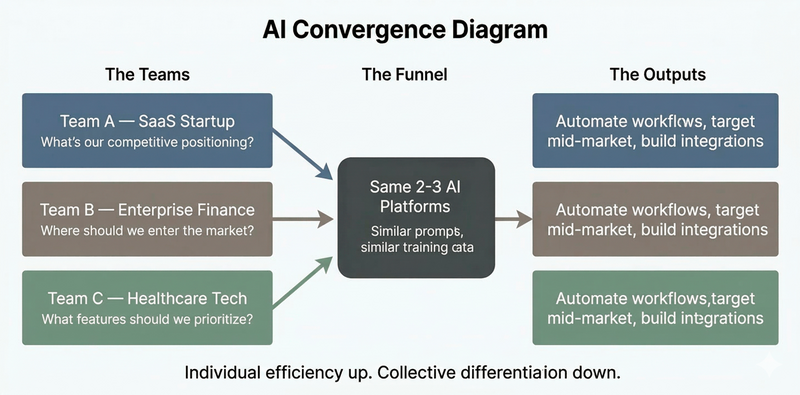
AI tools boost individual productivity but reduce collective originality. Research shows teams using the same AI platforms converge on the same ideas which is growing competitive risk.
This week's executive brief covers Qatar's helium shutdown threatening chips, Yann LeCun raising $1B for physical AI, record private credit defaults, Asian fuel crisis reshaping work, and escalating cyber attacks on medical infrastructure.

A week chasing Comet Tsuchinshan-ATLAS along Lake Superior led to an unexpected Milky Way shot — and a reminder to look up from the plan.

Anthropic's new research measures the gap between what AI can theoretically do and what people are actually using it for. The findings reshape how organizations should think about AI workforce strategy.
This week's executive brief covers February's surprise job losses, the AI-written code verification problem, Nvidia exiting OpenAI and Anthropic, drone attacks on AWS data centers, and Apple's $599 MacBook.

METR's developer productivity study collapsed because developers refuse to work without AI. What that means for how organizations should measure AI investments.
This week's executive brief covers OpenAI's massive funding round, Anthropic's clash with the Pentagon over military AI, the US-Israel strike on Iran, and Amazon's alleged price-fixing scheme.

The AI failures that cost real money aren't the spectacular ones. They're quiet — silent model updates, unmonitored systems, pilot gaps, and automating broken processes.
This week's executive brief covers the Supreme Court tariff ruling, why AI adoption mirrors Solow's productivity paradox, PayPal and Microsoft security failures, and the AI model race.

Your 18-month technology roadmap assumes certainty that doesn't exist. Plan for capabilities instead of tools, and build plans that survive reality.
The tech industry's transformation continues to accelerate, with this week's developments highlighting both promise and concern.
The tech industry's push for sovereignty and control is reshaping both global partnerships and market dynamics this week.

Everyone has an AI platform and a polished demo. Here are the questions that separate real AI solutions from sales theater in 30 minutes.
The tech industry's old guard is showing signs of strain this week, with notable pullbacks from two of its most prominent players

AI tools help junior employees produce senior-looking work. The gap between looking capable and being capable is where organizations get hurt.
The tech world grapples with questions about AI's practical value and economic impact as geopolitical tensions reshape the digital landscape.

AI coding tools feel like they're working, but the data says otherwise. The best engineers aren't coding faster — they're asking better questions.
Reality checks for executives navigating AI, tech, and the gap between what's promised and what's actually happening.

Cloud migrations, CDO hiring sprees, and AI pilots all followed the same pattern: unanimous agreement, then expensive reversals. Consensus is a warning sign.

Most analytics projects fail because organizations build dashboards before defining what decisions they would make differently.

95% of enterprise AI tools never reach production. A polished sales demo doesn't mean competent delivery — here's how to evaluate AI vendors.
Consolidation in media and enterprise tech signals giants are repositioning. Courts and regulators force Apple and Google to loosen their grip.

Technical teams know what AI can do. Operations teams know what problems cost money. They're rarely in the same conversation

A scouting trip, a dead tree, and a clear night in Colorado. Sometimes that's all it takes.

Build, buy, or wait? Most AI projects fail because teams pick technology before understanding the problem. Here's a framework for getting it right.

High-trust organizations decide in 3 days. Low-trust ones take 4 weeks. Like F1 pit stops, consistency and speed determine who wins markets.

Where ancient volcanic ash meets the last light of day. A landscape so alien, NASA uses it to test Mars rovers.

Organizations spend $109 billion on AI adoption while 74% can't demonstrate value. Why the rituals matter to some more than the results do.
Tech's power players are making moves this week. OpenAI's circular financing, Nvidia buying into Nokia, and governments pushing back against Big Tech.

An automated lighthouse on the Oregon coast taught me something about automation, human judgment, and the work that still matters most.

Most organizations have adopted AI but few have genuine confidence in their approach. The gap between performing certainty and building capability widens.
The guardrails are falling behind. AI tools can't summarize news accurately, hackers breach nuclear facilities. The capability-control gap widens.

Jensen Huang and Marc Benioff say AI agents will transform work overnight. The same promises were made about RPA in 2018 and then 50% of implementations failed.

I put in the work. It just didn't always lead where I thought it would.

While competitors debug their latest tech stack, you are serving customers. Sometimes the most strategic decision is choosing boring technology.
Technology keeps advancing, but the real story is what happens when it hits governments, unions, and market realities. A reality check on AI.

Leaders spend their lives extracting value from everything. But some things aren't meant to be useful; they're meant to be experienced.

Companies poured $109B into AI in 2024, yet productivity stats haven't moved. Is this an infrastructure build-out or a sophisticated bubble?

New research reveals experienced developers are 19% slower with AI tools, exposing the hidden process problems that actually control development speed.

Most companies are building AI strategies identical to their competitors. Finding your unique approach matters more than following best practices.
This week's stories show both the promise and the problems as tech giants fight for compute dominance while dealing with privacy questions and regulation.

I spent weeks planning one sunset photo in Big Bend. It reminded me why preparation beats reaction every time.

That 'just ship it fast' decision created a $100K maintenance headache. Your developers aren't slow — they're paying interest on your shortcuts.
Tech's "move fast and break things" culture hit a wall this week

Technology trends expire. Vendors get acquired. But solid decision processes, adaptable teams, and good judgment compound over time. Build those.

Most technical leaders were promoted for solving yesterday's problems, not AI challenges. Here is how to tell if yours can evolve.

Your LinkedIn feed isn't market intelligence — it's curated noise. How social media echo chambers distort executive decision-making.
Billion-dollar funding rounds and crumbling privacy protections reveal the true cost of digital transformation as the industry races ahead.

What photography has taught me about strategic leadership

Companies rush to implement AI without documenting institutional wisdom. The result: faster operations but weaker differentiation.
Weekly Intel for Sept 6, 2025: Anthropic's $13B raise, MIT finds AI use causes cognitive decline, Tesla retreats on Full Self-Driving, and more.
Big Tech doubles down on control while AI quietly reshapes the job market for an entire generation.

A CTO couldn't tell his board what AI tools the company was using. Most organizations can't answer basic questions about their AI spending either.

$2.3M spent, and nobody used the platform. Three strategic questions — skipped by most leaders — separate AI success from expensive experimentation.

AI is becoming a commodity. Your competitive advantage from 'having AI' expires fast. The real question: what do you do when everyone has the same tools?

The three questions that separate AI success from expensive experiments

Three groups are misleading you about AI right now. One is selling, one works for you, one IS you. How to spot the lies and stop funding fiction.

A massive gap exists between AI investment and actual value creation. Why 96% of companies fail and what the successful 4% do differently.

Why the unglamorous prep work determines whether your technology actually transforms your business or just drains your budget.

After selling a company I spent eight years building, I woke up one morning with no fires to fight. The hardest part isn't the exit — it's the identity crisis.

Stop treating AI like either a threat or a miracle cure. Start treating it like what it is: a powerful tool that requires thoughtful implementation.

Renaming your analytics dashboard to 'AI Insights Platform' isn't strategy — it's AI washing. Here's why that creates compounding strategic debt.

Every vendor claims their tool will transform your business. Most executives drown in solutions to problems they do not have. Learn to say no.

An AI architect posted 'Naive RAG sucks' with no explanation. When experts stop explaining trade-offs, leaders make million-dollar decisions on opinions.

One fuzzy C-suite decision spawned 17 meetings and 43 emails in six weeks. Here's how unclear decisions create a hidden 'meeting tax' on your organization.

Why Your Test Projects Never Scale

Stop planning the AI revolution. Companies winning with AI focus on steady improvements to basic operations, not flashy transformation projects.

When AI-Generated Code belongs to someone else

Most leaders assume AI resistance is about training or fear. The real issue is unclear permission structures around experimentation.

Bridging the Gap Between Vendor Promises and Organizational Reality

AI demos look impressive until customer satisfaction drops. Five questions to spot the difference between AI that works and AI that just looks good.

Most companies burn millions on AI that solves the wrong problems. The difference between AI strategy and the AI graveyard is focus.

I watched a company burn $1.3M on AI while their data lived in 12 disconnected systems. Your AI project is doomed without a data foundation.

31% of employees actively resist their company's AI strategy — and the top reason isn't tech concerns, it's feeling devalued. Here's how to fix it.

Middle managers are caught between AI strategy and frontline execution. Here's how their roles are changing and what skills they need now.

The boring stuff wins: infrastructure, data governance, change management. Successful tech strategy is the iceberg below the waterline.

That crusty ERP from 2005 handles 80% of your critical processes. Before you replace everything, here's why legacy systems deserve a strategy seat.

Companies racing to implement AI are making more decisions, but worse ones. Speed without direction just means reaching the wrong destination faster.

I built a SmugMug replacement in five hours with AI tools. When competitors can replicate your product that fast, your value proposition needs rethinking.

While everyone focuses on shiny new technologies, these foundational decisions quietly determine whether your company thrives or struggles.

Self-Learning AI Systems Create Illusions of Progress While Quietly Undermining Their Own Foundations

Start with business problems, not AI solutions. Here's how to separate real AI opportunities from expensive distractions — and when to wait.

McKinsey's latest AI survey shows what separates experimentation from real value: workflow redesign, CEO oversight, and meaningful KPIs.

Tech decisions without business input build capabilities nobody asked for. Business decisions without tech input create impossible expectations.

AI moves fast, but strategic principles don't change. Here's how to apply timeless thinking to navigate the compressed AI hype cycle.

Most companies are stuck between AI ambition and execution. A five-step framework to move from boardroom conversations to measurable business value.

The orgs winning with AI aren't the ones with the biggest budgets — they're the ones connecting AI directly to business outcomes. Build your flywheel.

AI Agents are part real advancement, part marketing rebrand. Here's how to cut through the hype and find where they actually deliver value.

Real-world lessons on balancing speed with stability and how tracking technical debt like financial debt can transform your development process.

I use AI daily — not to replace my thinking, but to multiply my output. Here's how I leverage AI for coding, research, and content.

Anthropic analyzed 4M+ AI conversations to reveal where AI actually gets used. The data shows augmentation wins over automation, 57% to 43%.

Everyone's impressed by what AI can produce. But flashy outputs aren't business outcomes — and confusing the two is an expensive trap.

AI moves fast. Here's a practical approach for business leaders to stay current with what matters without drowning in every announcement.

AI can generate answers, but subject matter experts validate them. In the AI era, deep domain knowledge is more valuable than ever — not less.

A new study reveals increased AI usage correlates with decreased critical thinking, especially among younger generations. What leaders must consider.

AI's real value comes from rigorous verification, not blind trust. Critical thinking and validation separate useful AI from expensive mistakes.

Rushing into AI projects without proper planning leads to expensive failures. Here is how to cut through the hype and focus on what matters.

Most organizations underestimate the complexity and cost of AI implementations. Success lies in preparing for the hidden challenges that derail projects.

Organizations often overlook incremental improvements in the rush to implement transformative technology. Finding the right balance matters.

A No-Nonsense Check to See if Your AI is Actually Working or Just Looks Good in Presentations

Multi-agent AI systems are moving beyond chatbots. Here's how orchestrating AI agents can transform operations — and why starting small wins.

A practical guide to balancing AI implementation with human capabilities, focusing on where each excels and how to create effective partnerships.

A practical guide to AI for executives: understand machine learning, NLP, and computer vision — then learn how to implement AI strategically.

Viewing AI as just a cost-cutting tool is short-sighted. Its real power is freeing people to focus on creativity, strategy, and innovation.

AI leadership isn't about becoming a tech expert — it's about adaptability, vision, and ethical responsibility. A practical guide for CxOs.

My grandfather fed hogs with leftovers nobody wanted. In business, your messy, raw data is the same kind of 'slop' — and AI can turn it into insight.

AI has vast knowledge but zero wisdom. Here's why that gap matters and why human judgment, context, and experience remain irreplaceable.

AI investment isn't optional — it's a strategic necessity. Here's how to pick the right AI projects, align them with your goals, and manage risk.

As we delegate more decisions and emotional labor to AI, we risk losing compassion, empathy, and connection. AI should be a partner, not a replacement.

AI is only as good as your data. Without strong data habits — governance, quality, and ownership — even the best AI systems will fail.

Using ChatGPT for emails isn't 'doing AI.' Real implementation means building models, integrating systems, and learning from failure. Here's how.

NLP is the real technology behind LLMs, and it's quietly reshaping customer engagement. From chatbots to sentiment analysis, here's why it matters.

Five areas where AI transforms operations and five challenges you must navigate. A practical guide for C-suite leaders implementing AI.

LLMs aren't creative — they're enhancers. Like Lightroom for photography, AI tools help you do what you do better, not replace the work itself.

Drowning in data but starving for insights? A no-nonsense guide to machine learning techniques that turn business data into better decisions.

LLMs can transform customer service, content, and research — but they hallucinate, lack reasoning, and need guardrails. A balanced guide for leaders.

AI ethics isn't optional — it's foundational. Five opportunities and five challenges for building a responsible AI-first culture in your organization.

There's a big gap between implementing AI and building an AI-first culture. Five strategies and five challenges for making AI part of your DNA.

RLHF is how AI learns from human preferences. Here's how Reinforcement Learning from Human Feedback reshapes business decisions and customer experience.

Data literacy is the foundation of successful AI. Without it, your team can't interpret outputs, spot biases, or make informed decisions.

Data literacy implementation is harder than it sounds. Here's how to overcome resistance, convince leadership, calculate ROI, and measure success.
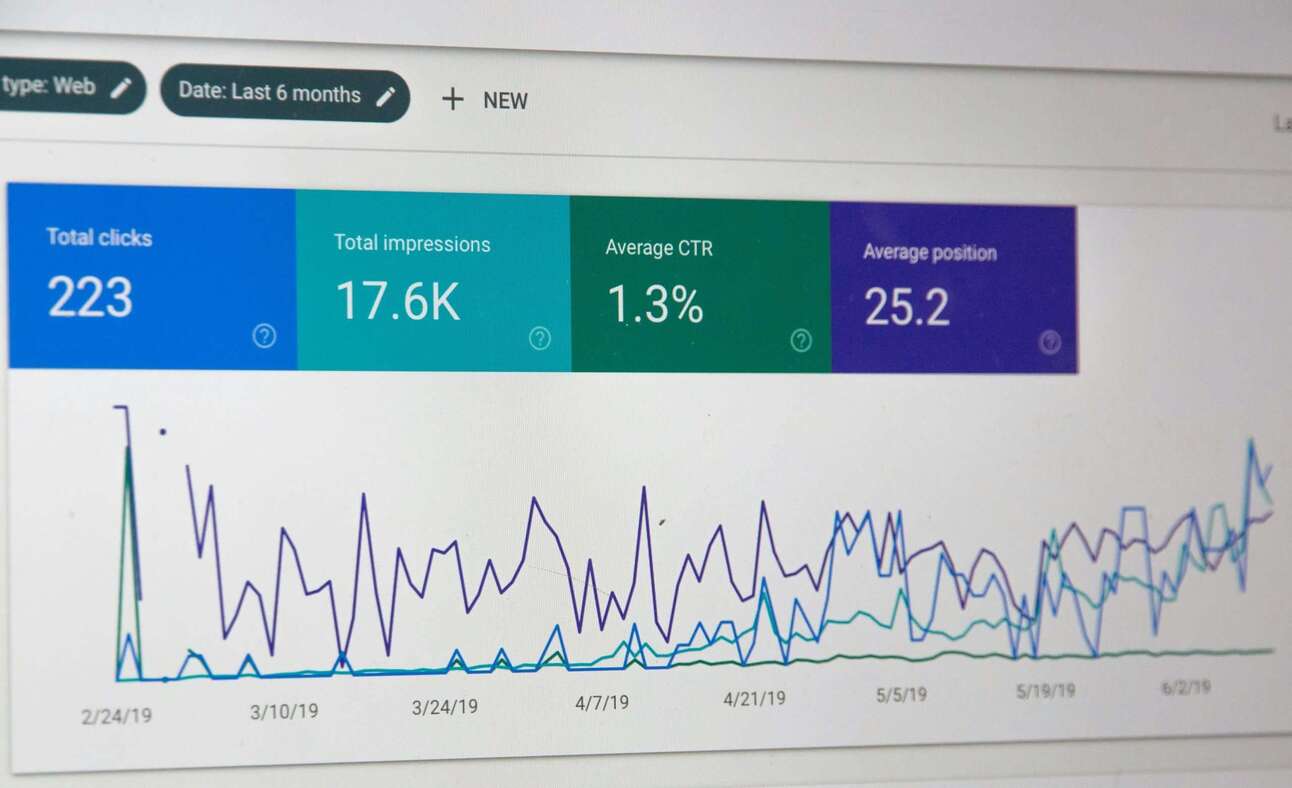
Data literacy on a shoestring budget, industry-specific strategies, ethics in AI, and real success stories. Practical Part 2 of the series.

AI isn't just for enterprises. SMEs can leverage affordable AI tools for customer service, marketing, and sales — here's how to start smart.

The AIC Framework bridges the gap between ideas and execution. Here's how Action, Innovation, and Collaboration drive real business results.

Brilliant technical work gets ignored because it's presented wrong. Here's how data scientists bridge the gap to business leadership.

The 'brochure costs' of AI are only 30% of the real investment. Data prep, compliance, change management, and opportunity costs make up the other 70%.

Data scientists, engineers, and business teams in separate corners kill AI projects. Here's how to build cross-functional teams that deliver.

People are blindly trusting AI outputs without questioning them. Here's how to maintain critical thinking while leveraging AI effectively.
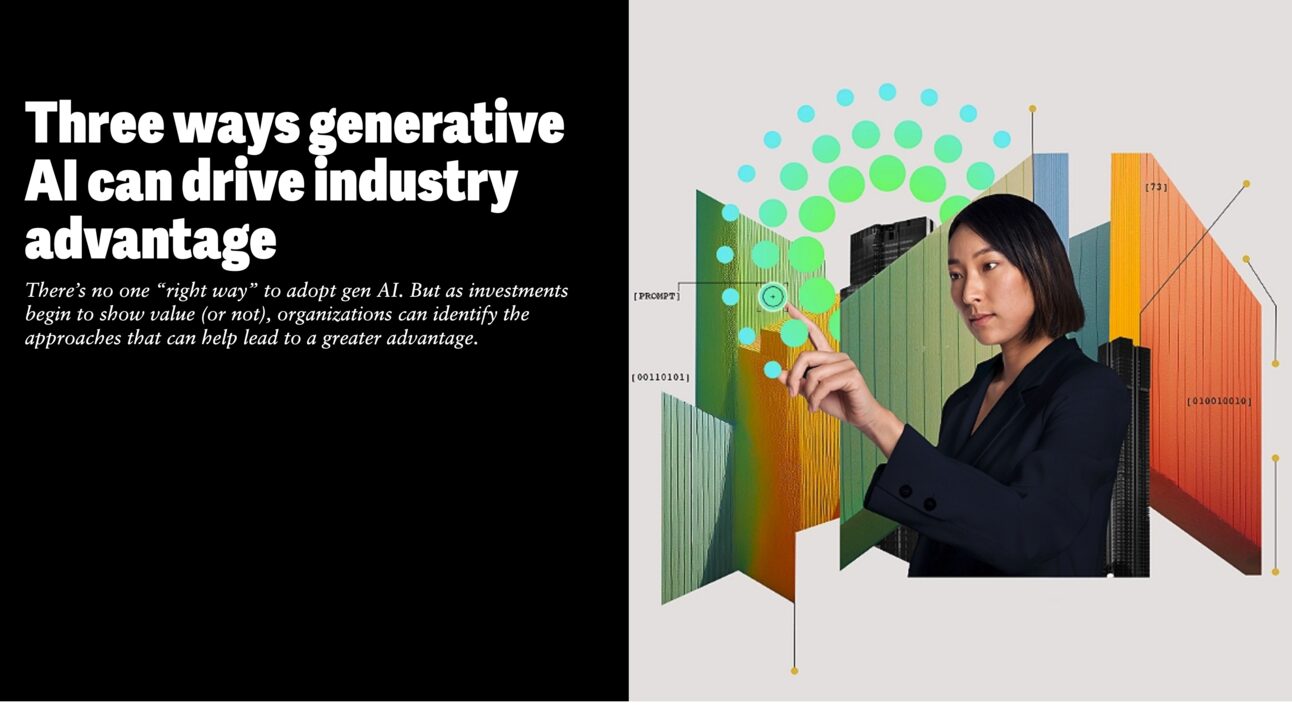
67% of orgs are doubling GenAI investment, but 68% have moved less than 30% of experiments to production. Here's what's blocking scale.

AI is democratizing expertise and changing how companies compete. Here's how to rethink strategy when rare knowledge becomes widely accessible.

The biggest hurdle in AI transformation isn't the technology — it's people. Communication, skills development, and culture determine adoption or failure.

Three warning signs your technical debt is critical: devs leaving, simple changes need refactoring, bug fixes create new bugs. Here's a fix framework.

The cost of indecision exceeds the cost of imperfect action. Technology decision paralysis drains productivity, morale, and competitive position.

Most companies hoard data without using it. Building a data-first culture means connecting data to decisions — here's how to make the shift.

The real AI leadership challenge isn't technical — it's balancing automation with human connection. Here's how effective leaders are adapting.

While everyone chases ChatGPT, the real AI revolution is about augmenting human thinking — not automating tasks. Most organizations are missing it.

A CEO's Guide to Implementation, Security, and Success

Business leaders often confuse technology selection with strategy. Learn why your tech stack isn't your strategy and how to align technology decisions with business goals.
Like what you're reading?
Get new issues delivered to your inbox. One idea per issue, no spam.