
AI tools help junior employees produce senior-looking work. The gap between looking capable and being capable is where organizations get hurt.

95% of enterprise AI tools never reach production. A polished sales demo doesn't mean competent delivery — here's how to evaluate AI vendors.

Technical teams know what AI can do. Operations teams know what problems cost money. They're rarely in the same conversation

High-trust organizations decide in 3 days. Low-trust ones take 4 weeks. Like F1 pit stops, consistency and speed determine who wins markets.
Organizations spend $109 billion on AI adoption while 74% can't demonstrate value. Why the rituals matter to some more than the results do.

An automated lighthouse on the Oregon coast taught me something about automation, human judgment, and the work that still matters most.

Most organizations have adopted AI but few have genuine confidence in their approach. The gap between performing certainty and building capability widens.

Leaders spend their lives extracting value from everything. But some things aren't meant to be useful; they're meant to be experienced.

New research reveals experienced developers are 19% slower with AI tools, exposing the hidden process problems that actually control development speed.

Most companies are building AI strategies identical to their competitors. Finding your unique approach matters more than following best practices.

I spent weeks planning one sunset photo in Big Bend. It reminded me why preparation beats reaction every time.
That 'just ship it fast' decision created a $100K maintenance headache. Your developers aren't slow — they're paying interest on your shortcuts.

Most technical leaders were promoted for solving yesterday's problems, not AI challenges. Here is how to tell if yours can evolve.

What photography has taught me about strategic leadership

A CTO couldn't tell his board what AI tools the company was using. Most organizations can't answer basic questions about their AI spending either.

The three questions that separate AI success from expensive experiments

Three groups are misleading you about AI right now. One is selling, one works for you, one IS you. How to spot the lies and stop funding fiction.

Why the unglamorous prep work determines whether your technology actually transforms your business or just drains your budget.

After selling a company I spent eight years building, I woke up one morning with no fires to fight. The hardest part isn't the exit — it's the identity crisis.

Stop treating AI like either a threat or a miracle cure. Start treating it like what it is: a powerful tool that requires thoughtful implementation.

Every vendor claims their tool will transform your business. Most executives drown in solutions to problems they do not have. Learn to say no.

One fuzzy C-suite decision spawned 17 meetings and 43 emails in six weeks. Here's how unclear decisions create a hidden 'meeting tax' on your organization.

Why Your Test Projects Never Scale

Most leaders assume AI resistance is about training or fear. The real issue is unclear permission structures around experimentation.

Bridging the Gap Between Vendor Promises and Organizational Reality

AI demos look impressive until customer satisfaction drops. Five questions to spot the difference between AI that works and AI that just looks good.

31% of employees actively resist their company's AI strategy — and the top reason isn't tech concerns, it's feeling devalued. Here's how to fix it.

Middle managers are caught between AI strategy and frontline execution. Here's how their roles are changing and what skills they need now.

McKinsey's latest AI survey shows what separates experimentation from real value: workflow redesign, CEO oversight, and meaningful KPIs.

Tech decisions without business input build capabilities nobody asked for. Business decisions without tech input create impossible expectations.

Rushing into AI projects without proper planning leads to expensive failures. Here is how to cut through the hype and focus on what matters.

AI leadership isn't about becoming a tech expert — it's about adaptability, vision, and ethical responsibility. A practical guide for CxOs.
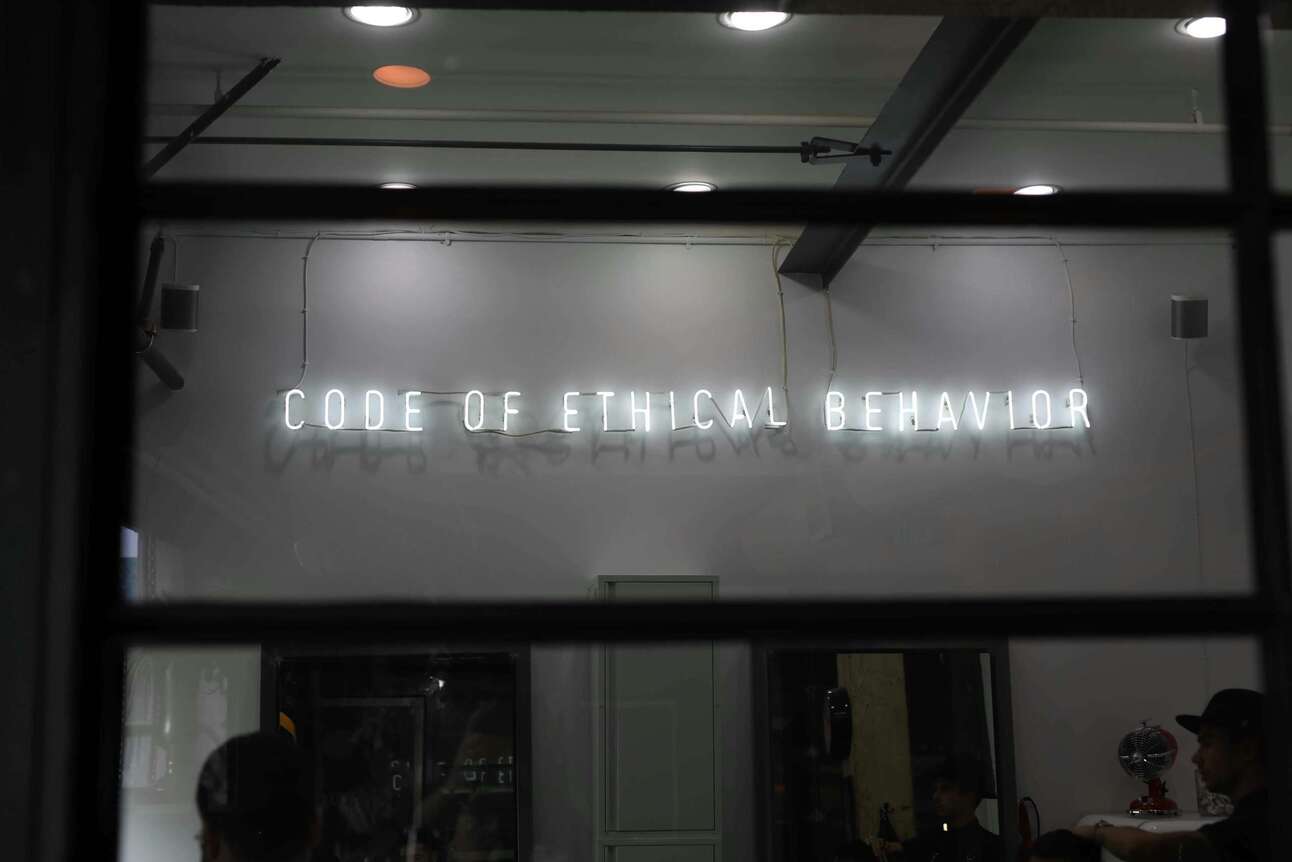
AI ethics isn't optional — it's foundational. Five opportunities and five challenges for building a responsible AI-first culture in your organization.

There's a big gap between implementing AI and building an AI-first culture. Five strategies and five challenges for making AI part of your DNA.

Brilliant technical work gets ignored because it's presented wrong. Here's how data scientists bridge the gap to business leadership.

Data scientists, engineers, and business teams in separate corners kill AI projects. Here's how to build cross-functional teams that deliver.

The biggest hurdle in AI transformation isn't the technology — it's people. Communication, skills development, and culture determine adoption or failure.

Most companies hoard data without using it. Building a data-first culture means connecting data to decisions — here's how to make the shift.

The real AI leadership challenge isn't technical — it's balancing automation with human connection. Here's how effective leaders are adapting.
Data and culture must go hand in hand in modern organizations.
Rather than blindly follow your a 'successful' company, find ways to incorporate their successes into your organization. Be pragmatic, not dogmatic.
Your data project is going to fail. You can plan everything perfectly, use the best systems, hire the best people yet your project will fail.
Underdogs win all the time, which is why you should always continue to improve and become better than you were.
Jeffrey Philips currently wrote a nice piece titled "Innovate your processes before innovating your products" over on his excellent Innovate on Purpose
I just finished reading a great article titled "The Most Important Question You Can Ask: Then What?" In the article, the author writes: The great art of
This won't surprise many people (at least I hope it doesn't)...there is a huge difference between "theory" and "practice". I'm an academic AND and
I just ran across an article titled "The CIO balancing act: agility, innovation, cost savings" over on The Enterprisers Project. If you haven't stumbled
Without proper change management, any transformation you undertake is doomed to failure.
I just read "The Four Malfunctions of a CIO" by Joe Scherrer and wanted to expand a but on what Joe writes about. Before I do that, let me share the
Companies no longer want a controller of technology. They want a leader who can demystify IT and help them use technology to deliver real value.
One of the most important roles of the CEO is to drive and shape corporate culture. Without a culture that fits the strategy, your business stalls.
CIOs should not bemoan their predicament. They should see it as an opportunity to reshape their job, career, and the IT group's role.
The CIO doesn't need to be sidelined. By focusing on relationships, clients and leadership CIO's can ensure they are helping to lead the organization.
Are you managing risk within your organization or are you avoiding risk? As a CIO, you should help the organization manage risk.
Being data-driven means nothing if data does not lead to better decisions. Find the data systems that work for your business and use them well.
Dark Data can arise in many ways. One way is via Shadow IT and the Data Disconnect
Ah Granola. That wonderful treat consisting of oats, nuts, honey and other assorted goodies like berries, bananas, chocolate chips, raisins etc etc.
There are many ways to make coffee. You've got your pre-ground coffee. You're pre-packaged coffee. Whole Bean coffee. Self-roasted coffee. Instant
One of the fastest ways to build trust is to keep your word. One of the fastest ways to destroy trust and damage a relationship is to agree...and do
Stop looking for the holy grail. There is no holy grail in life. It is all about doing the work, getting better at it, and doing it some more.
Back in my college days, I was quite the party animal. Well...that's actually a bit misleading...I was a physics major...so partying was really more like
Most businesses are chasing. They're chasing their competitors. Chasing their industries. Chasing their perceptions of their future as well as chasing
This is a guest post by David Burkus, Editor of LeaderLab.org. David and LeaderLab has just released their new book titled The Portable Guide to Leading
This post sponsored by the Enterprise CIO Forum and HP. Application Modernization....only two words...but two words that denote a big undertaking for most
Last week the author of The Little Black Book of Leadership, Todd Dewett Ph.D., contacted me to say hello, complement me on my work here and offer up an
A few months ago I wrote a post titled Cognitive Dissonance & IT. From that post, you'll remember that cognitive dissonance is: an uncomfortable
Lately, I've been having a lot of knee pain. For the last few months, its been constant and regular and seemed to get worse when I would spend a lot of
Ray Ozzie is leaving Microsoft. After it was announced that he was leaving, he published a memo on his blog. The memo, titled Dawn of a New Day, is an
Passion. What type of emotion is evoked when you read it or hear that word? What do you think of when you think of passion? Do you think about your job?
This is a guest post from Elliot Ross. Elliot blogs about business technology issues for non-technology managers in the small to medium enterprise.
I've said before that people are more important that process. I've said it in many different ways and in many different articles. After every article, I
Enterprises Consider Business Agility As A Primary Driver Towards Cloud By Krishnan Subramanian on CloudAve Quote: This report has a quantitative survey
A few weeks ago, I wrote a post titled Open Source, The Enterprise and The Community where I wrote about embracing the community that exists within your
I've just started reading Multipliers: How the Best Leaders Make Everyone Smarter (affiliate link) by Liz Wiseman and Greg McKeown. Actually...I've only
Mark McDonald, of Gartner, offers some excellent tips for IT planning for 2011 in a post titled Three things to think about as you plan for 2011. In the
I grabbed a copy of Open Leadership: How Social Technology Can Transform the Way You Lead (affiliate link) by Charlene Li for my business trip last week.
Image by Aprile C via Flickr I'm in Atlanta this week on business. I decided to stay at a nice little boutique hotel in midtown called the Artmore Hotel.
I really dislike it when I hear someone in IT say that its time 'run IT as a business'. Why? Because both terms normally convey a sense of importance upon
In my post earlier this week, I spoke, or more accurately typed, about the importance of story. I wonder if there are any CIO's and IT leaders out there
You’re Just the Founder « Steve Blank A great reminder to everyone that what you do today might just come back around to bite you in the future. Applying
Hey CIO - if you want to survive, you need to figure out a way to fascinate your organization. I'm currently reading "Fascinate: Your 7 Triggers to
Do you know what The Onion is? If not, it's a satirical newspaper and website that is hysterical...you should read it.
I picked up Delivering Happiness: A Path to Profits, Passion, and Purpose by Tony Hsieh through the Amazon Vine program (love that program...free stuff to
How to Defy Newton's Laws of Motion in Marketing by Valeria Maltoni on Conversation Agent: Quote: Emerging media allows you to develop laser focus in your
I've been trying to catch up on my reading list. Most articles, books and blogs that I've been reading have been focused around CIO's and IT organizations
Happy Easter everyone. Last week was the first published post using Delicious to manage links for my Sunday links post. I used a javascript from
I just finished reading Chase Jarvis' post titled "Creativity alone is not enough". In this article, Chase argues that Creativity isn't enough for people
Too Big to Trust? Or Too Untrustworthy to Scale? by Charles H. Green on Trust Matters Preach it Brother Edelman by Robbin Phillips on Brains On Fire Blog
Strategy Is Boring by Kneale Mann on One Mann's Opinion Are you stress testing your IT strategies? by Christina Torode on TotalCIO Innovation and the
Do you know your IT staff? Do you regularly communicate with them? If you do, good for you. If not, you're missing out on a wonderful opportunity to build
A few weeks ago I received Leadership Test: Will You Pass? (amazon affiliate link) by Timothy R. Clark, Ph.D. to review The book is a small one (~99 pages
Are you innovating or imitating? Anywhere you go these days, you'll find someone talking or writing about Innovation. Most of the stuff I've been
Five by Chuck Musciano on The Effective CIO The Splinternet means the end of the Web's golden age by Josh Bernoff on Groundswell Run IT Like a Business,
"I hate consultants." When I heard those words spill out of my lunch companion's mouth as soon as we sat down, I knew it would be a long lunch meeting.
Short post this week as I'm swamped and haven't had time to work anything up....but I wanted to take a quick second to ask my readers to give me some CIO
I just finished reading "Managing" by Henry Mintzberg. Great book. What's so great about it? It provides a good reminder that being a good manager is
I realize it's a few days into the new year and most people have already committed their 2010 resolutions to paper (or screen)...now its my turn. Rather
Competing with Pirates by Mark Fidelman on Seek Omega and Cross Posted on CloudAve Why Planning Is Important, Your Plan is Not by George Krueger and
I've been sitting here thinking. Gene De Libero say's I'm always thinking...not sure if that's good or bad! :) What have I been thinking about? Lots of
In a previous article titled "Leading by saying No", I implore CIO's to lead their organization by saying 'no' whenever necessary. As I said in that
Some interesting research results being reported over on Fistful of Talent by Lizz Pellet who is the Chief Culture Officer at EMERGE International in a
I've got a few pet peeves. Linear Thinking is one of them. Another one is talking about doing something but never doing it. I'm not talking about 'not
I ran across an interesting post today titled "Why you don't need Social Media Consultants" on the Brains on Fire Blog. The main thesis of the post is:
Starting with Trust by Jamie on Get Me Jamie Notter Self-Organization vs. Emergence by Jurgen Appelo on NOOP.NL: Managing Software Development When
Last week I wrote about "Turbulence, IT & The New CIO" and discussed the need to embrace agility and speed in order to address the turbulence that we
The New CIO is a weekly article about the challenges facing today’s CIO as well as what can be done to prepare for future challenges. I just read a 'call
The New CIO is a weekly article about the challenges facing today’s CIO as well as what can be done to prepare for future challenges. A few months ago, I
The New CIO is a weekly article about the challenges facing today’s CIO as well as what can be done to prepare for future challenges. There's lots of
The New CIO is a weekly article about the challenges facing today’s CIO as well as what can be done to prepare for future challenges. So you want to be a
The New CIO is a weekly article about the challenges facing today’s CIO as well as what can be done to prepare for future challenges. Do you know the full
The New CIO is a weekly article about the challenges facing today’s CIO as well as what can be done to prepare for future challenges. Are you agile? I'm
How to SWOT away Strategic Planning by Steve Neiderhauser The Role of the CTO: Four Models for Success by Bob Gourley on CTOvision.com A Tendency to Blame
The New CIO is a weekly article about the challenges facing today’s CIO as well as what can be done to prepare for future challenges. As a follow-up to my
The New CIO is a weekly article about the challenges facing today’s CIO as well as what can be done to prepare for future challenges. It as if we're more
The New CIO is a weekly article about the challenges facing today’s CIO as well as what can be done to prepare for future challenges. Innovation. That's a
The New CIO is a weekly article about the challenges facing today’s CIO as well as what can be done to prepare for future challenges. Earlier this week, I
I just finished Toy Box Leadership: Leadership Lessons from the Toys You Loved as a Child...somewhat flawed but a good book nonetheless. Flawed may be a
“None” is Not a Social Media Strategy by Chris Curran on CIO Dashboard Web 3.0 Is Coming – Are CIOs Ready? bt Dr. Jim Anderson on The Accidental
I just finished reading Succession: Are You Ready? (Memo to the Ceo) by Marshall Goldsmith. While the subject was interesting, I think the audience for
The New CIO is a weekly article about the challenges facing today’s CIO as well as what can be done to prepare for future challenges. We've all heard the
Get Ready As Corporate Sites and Social Networks Start To Connect by Jeremiah Owyang on Web Strategy Why Authenticity is More Important Than Ever by Aaron
The New CIO is a weekly article about the challenges facing today’s CIO as well as what can be done to prepare for future challenges. I've seen many
Update - My original post was titled "A milestone - 4 years old". Apparently I can't count :) I started the blog in 2006 so it's my blog's THIRD
Social change takes more than social media by Ivan Booth on the Rootwork Blog (via Beth Kanter's Blog) KISS: The Difference Between Strategy and Tactics -
The New CIO is a weekly article about the challenges facing today’s CIO as well as what can be done to prepare for future challenges. Today's CIO is
2009 is half over and its been a pretty good year so far. What's transpired this year? In February, I put my consulting practice on hold to join the Boy
The New CIO is a weekly article about the challenges facing today’s CIO as well as what can be done to prepare for future challenges. Ahhh...Social
I just read a great post by Jeffrey Phillips titled Intense Ambiguity that really brought into light what it's like working for a boss or organization
I was recently reading Dagmar Recklies' article titled What Makes a Good Change Agent? and started thinking about some of the people that I know who are
Why Your Corporate Message Isn’t Being Heard by Jason Falls on Social Media Explorer The 7 Sins of Customer Service by Valeria Maltoni on Conversation
I've been thinking about writing a weekly article and finally found a topic that I think lends itself well to this approach. I'm planning on writing about
One of the most visited posts on this blog is titled "The Problem(s) with Linear Thinking". That one post makes up for a good amount of monthly visitors
I just finished reading an article in the Dallas Business Journal titled Acting like a a 'Best Boss' and the only thing I could think about while reading
What happens when you create the best strategic plan in the world but don't have a plan to implement it? Lots of wheel spinning and very little progress.
Can an organization be built on individuality with a focus on bringing humanity back to business? I think so. The modern day corporation was developed to
Every team/group has a 'go to' person. You know...that person that you (and others) know you can count on to 'get stuff done'. You find yourself always
I've been pondering the question "What is a Leader?" for a while now. It's a question that's always in the back of my mind and I've never really gotten a
I've always tried to go the extra mile for a client/customer when they have a complaint. I want to resolve their issue and turn their bad experience into
Image via Wikipedia John Baldoni had a great article on HarvardBusiness.org titled "Five Things John Madden Teaches Us about Leadership." Apparently John
Things not to say - "We don't have time" by Scott Berkun on The Berkun Blog Thinking outside the project: implied responsibilities of an agile product
Image via Wikipedia Tracie and I spent Good Friday at the Dallas Arboretum (jump over to my photoblog - OneFour Photography - for some photos). The trip
As part of a research project for my doctorate work I've been looking at the use of storytelling for knowledge sharing in project teams. I've found the
Last month I received a review copy of NOBLE ENTERPRISE: The Commonsense Guide to Uplifting People and Profits by Darwin Gillett. I had my doubts about
CIO Magazine ran a survey of 208 Chief Information Officers (CIO) and reported the results in an article titled "IT Budget & Staffing Survey Shows
This is a guest post from Michael Sebastian, PhD. Find out more information about Michael here. Anger, fear, depression and fatigue. These are the
Sometimes I wonder about our leaders. These leaders may be your country's leaders or they may be your teacher. Perhaps your VP or your CEO. I think about
I received an email a few weeks ago asking if I would be interested in reviewing the new book from Steve Zaffron and Dave Logan titled "the three laws of
Over on my photography blog, onefourPhotography, I wrote a post titled "Photographs are taken by people - not technology" that got me to thinking. I
According to research conducted by Harvey Nash, an IT Recruitment firm, everything. Information World Review reports on this research in an article
A few weeks ago I received a complimentary copy of Lead Well and Prosper: 15 Successful Strategies for Becoming a Good Manager from Nick McCormick, the
Paul Dunay over at Buzz Marketing for Technology wrote a post titled "Sin of Inclusion" that pointed me to some commentary on the IT Services Marketing
According to Information Week, the Top 10 issues for CIO's in 2009 are: Customer-Facing Innovation Attacking the 80/20 Ratio The Challenging Economy The
My wife just asked me what my resolutions were for 2009. I normally don't do 'resolutions' but the question, and the many blog posts about resolutions,
McKinsey has recently released a report titled "IT's unmet potential: McKinsey Global Survey Results" that shows that there is still a lot of work to do
Madoff Madness: When Smart People do Stupid Things by Charles Green on Trusted Advisor Associates Five Reasons to kill IT Projects on TechRepublic (hat
In these troubled times, it's hard for organizations to focus on employee moral and happiness. I've heard many 'leaders' say things like "they should be
According to a research report released by The Hackett Group, and reported by Financial Week, they don't. The Financial Week article, titled "Customers
Steve Neiderhauser posted some excellent commentary in a blog post titled "Persuasion Equation". In the post, Steve mentions a class he attended that
For the longest time, I've put off reading "Good to Great" by Jim Collins but finally decided to pick it up. Have you ever realized that your perception
Would you rather have one great big idea or tons of little ideas? Me? I'm fond of having a lot of little ideas. Why? Little ideas are easier to
wanted to follow up my post titled "In a downturn, people are vital" with a few more thoughts on the subject. In that post, I said that "employees are
The latest edition of CIO Magazine has an interesting article titled "Power from Your People" written by Karan Sorenson, VP & CIO at Johnson &
Management Issues had an article on Sept 25 titled "Looking after talent is vital in a downturn" that gave me hope when I saw the title. The article
W. Clement Stone said: “Have the courage to say no. Have the courage to face the truth. Do the right thing because it is right. These are the magic keys
Management Issues (MI) reported today on a survey by Careerbuilder.com that says that many US workers are losing faith in their senior leaders. MI
According to the Wall Street Journal Business Technology Blog, the Society for Information Management has reportedly released a report on a study
I ran across a great book at Half-Price Books last week. The book, Small Giants: Companies that Choose to be Great Instead of Big by Bo Burlingham,
The 21st annual CIO 100 list has just been delivered. The article leading up to the list of the CIO 100 is quite interesting..I'm reading things like
CIO.com has an interview with Linus Torvalds that I'd just had to share...very interesting commentary from Linus on managing software projects. In the
Timothy Johnson takes a swipe at methodologies in his post titled "Worshipping the Hammer". To be more accurate, he takes a swipe at those people who
Jim Champy's new book titled "Outsmart!: How to Do What Your Competitors Can't" is an interesting book. It's short and easy to read...and full of some
Peter Vajda has a great post over on Slow Leadership titled "Why People Resist Change" that is well worth the time to read. Peter argues that the reasons
I was reminded this past weekend by Bruce Henry that I sometimes push "publish" much too quickly on a blog post. Go read my post titled "Leadership and
Just finished reading "Moose on the Table"by Jim Clemmer. Before I get into the review, let me define "moose on the table." According to the author, it
Michael Hugos had a really good post on CIO.com titled "Agility Means Simple Things Done Well, Not Complex Things Done Fast" that provided the best
I recently ran across a survey by Accretive Solutions (formerly Horn Murdock Cole, Dickson Allan, BF Consultants, and CFO Service) discussing the results
Recently, while reading a book on Organizational Change and Project Management, I noticed a disturbing pattern. The book I was reading discusses the
Where I come from (small town Oklahoma), silos are part of life for dairy farmers. A silo is a good thing...it stores grains (we called it sileage) to
I asked the following question on LinkedIn earlier this week and received some very insightful responses: What are the top challenges in IT organization's
In a recent posts, I've mentioned employee engagement (more on the topic here, here and here)...I've had a few emails from readers asking me to give some
Carmine Coyote had a great post over on Slow Leadership today titled "The More Meetings, The Less Trust". The introductory paragraph sums it up nicely
One thing that I've heard often is that a project manager role is a good thing for your career and will help your ascent up the ladder to more
Short post today...but powerful (at least I think so). Great post over at Carpe Factum today titled "Are You Botox-ing Your Organization?". Not much I can
If you'd like to know the answer that question, I have a new book for you to read: "Why Work Sucks" by Cali and Jody. This book (which I haven't started
Interesting analysis today over on Jeffrey Phillips' Thinking Faster Blog in an article titled "Productivity Barriers". Note: if you have an interest in
Aligning business and information technology by hiring the right people. Implementing Human Capital Management practices to ensure alignment.
Employee engagement has been seen as a 'buzzword' for some time but also been touted as something that every organization should focus on. It appears that
When did common sense get removed from the corporate technology selection process? For those that don't know what it is, technology selection is the
I had the following stated to me today in a meeting: "Cost is a fact, Price is a decision" What a great quote and very true. The cost of a product or
Scot Herrick over at CubeRules had a very interesting post today titled "Innovating Like Crazy; Executing Like Crap". Great title and great thoughts in
This post is a follow up to my post titled "Employee Onboarding". Research reported on a recent Management Issues article titled "How to lose half your
As some of you may have read in my previous post titled "I've been tagged...8 Random Facts", I used to lift weights and compete as a powerlifter while in
Sally Lemke, a nurse in the Chicago area, was named VNA Foundation "Super Star" on July 10th. She'll be without a Job on July 30th according to the
Why hiring only top-tier MBA graduates creates dangerous uniformity. Ricardo Semler's case for building diverse organizational culture through broader hiring.
Why the sink-or-swim approach to employee onboarding fails and what companies should do instead. Lessons from research and real experience.
Five common hiring challenges — from writing job descriptions to onboarding — and practical ways to overcome them to attract and retain great people.
Six keys to setting new team members up for success — from buddy systems to culture orientation — and what happens when managers skip onboarding basics.
In my many years of school and independent reading, I've run across a lot of theories about Leadership. Each theory seems to have its own idea of what it
When I first heard of participative management, I thought that it must be some 'new fad' (which isn't true at all) and after reading a few things about
Many other bloggers (Hal Macomber for one) have already discussed this report, but I wanted to say a quick word about it as well. The report, from the
The Slow Leadership blog has an interesting post about "Practicing Conscious Incompetence". What is Conscious Incompetence? In a nutshell, it is the act
Do you consider yourself a good leader? How about a good listener? According to Larry Spears, CEO of the Greenleaf Center, one of the top 10 skills that a
Ran across an interesting blog written by Rhett Laubach titled "Personal Leadership Insight" has a lot of interesting ideas about leadership. One
The February 2007 edition of the Harvard Business Review (HBR) contains one of the best articles I've read in that journal in quite a while. The article,
Another great post by Charles on his Trusted Advisor Associates blog "Trust Matters". In the post, Charles is describing why he has named his blog "Trust
Just ran across an interesting post about leadership tools on Kent Blumberg's blog. Kent lists 15 'tools' that are essential for a leader. In a nutshell,
One of the most important things a leader can do (if not the most important) is to ensure that their organization executes the appropriate plans/actions
Mike Griffiths has a great post about Agile Project Leadership worth checking out. An excerpt worth sharing is: Management is concerned with mastering the
The blog "Slow Leadership" recently had a good post about Building Trust. An excerpt from the article is: Trust is an essential basis for a productive,
Still continuing my reading on Agile Project Management and ran across W. Edward Deming's famous "Fourteen Principles of Management" again (for the
A great post over on PMThink! titled "Leadership Practices: Sound Advice" that is worth sharing. The post discusses a recent article in CIO Magazine
I was researching the term "servant leader" today and ran across a few quotes from Robert Greenleaf, the man credited with coining that phrase. The quote
Erik Mazzone posted a thoughtful question in his post titled "A Question". An excerpt: What is the one most important conversation that you have not had
The Jan 15 2007 BusinessWeek Magazine has an article about Bob Nardelli's ouster at Home Depot (another good article about his ouster is at the New York
Management Issues has an interesting article about the apparent decline of trust that employees have in management. The article, titled "Fewer than half
Rajesh Setty at Life Beyond Code has been posting "Quought for the Day*" posts for the last few weeks (see the end of this post for the definition of
Trusted Advisor Associates has a great post titled "Trust Tip 38: Don't Exceed Expectations" that is definitely worth a read. A nice quote from the post
Just finished my morning read of some of my favorite blogs and wanted to bring Don Blohowiak's post from yesterday to everyone's attention. The post,
Sorry for using a title that has been used many many times, but it does a good job of capturing the essence of this post. Erik Mazzone has an interesting
David Maister posted another great article today relating to the almost relentless quest for corporate growth in todays marketplace. David writes: In most
In a 2003 article in Harvard Business Review, the article titled "The Five Minds of a Manager" written by Jonathan Gosling and Henry Mintzberg, the
A story broke on Tuesday December 5th in the Dallas morning News (DMN) about the Dallas Independent School District's new head of the Office of District
I was just reading through one of my favorite blogs (David Maister's People, Passion and Principles) and was delighted to read about David listening to
Prior to reading the new Businessweek (Dec 11th 2006), I ran across Web Worker Daily's (WWD) post about the article and the way in which Best Buy is
Was reading a post on David Maister's blog about the method in which Pfizer may or may not be using email to let their workforce know if they are part of
Like what you're reading?
Get new issues delivered to your inbox. One idea per issue, no spam.